Freight Forwarder China to USA Amazon FBA: An Insider’s Guide to Reliable FBA Head-Haul Shipping
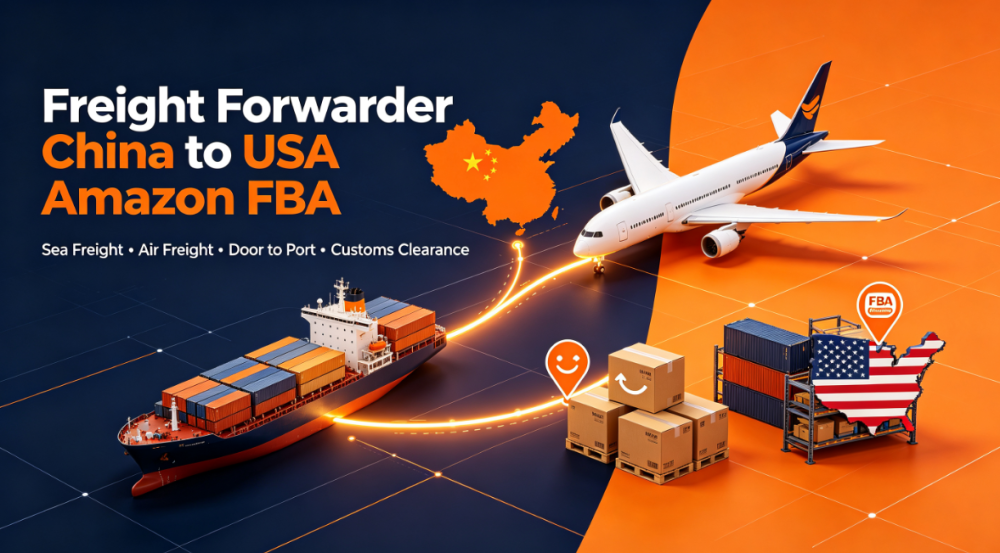
If you sell on Amazon USA and manufacture in China, you already know the biggest hidden challenge isn’t product research or PPC. It’s moving inventory from a factory in Shenzhen, Ningbo, or Yiwu into an Amazon fulfillment center in California, Texas, or New Jersey without blowing your margins or missing your restock window.
I’ve spent years working in China-to-USA logistics, and I’ve seen the same patterns repeat. Some sellers treat freight forwarding as an afterthought. Others chase the lowest per-kilogram quote and end up paying more in storage, demurrage, rejected shipments, and lost sales. The sellers who scale predictably do one thing differently: they treat their freight forwarder as a supply chain partner, not just a vendor.
This guide is not a generic overview. It’s a practical, boots-on-the-ground breakdown of how to ship from China to Amazon FBA in the USA — the modes, the costs, the mistakes, and what actually makes a freight forwarder worth your trust.
Why Your Freight Forwarder Can Make or Break Your Amazon FBA Business
A freight forwarder from China to USA for Amazon FBA does much more than book a container or hand your cartons to DHL. A good forwarder coordinates:
Factory pickup and cargo consolidation in China
Export customs clearance
Freight booking — ocean, air, or express
USA import clearance
Customs bond and ISF filing
Duty and tax handling
Final delivery to Amazon fulfillment centers
If any one of those steps fails, your inventory doesn’t arrive. It gets held at customs, sits at a port, or gets refused by Amazon because of labeling or pallet issues. The result is the same: stockouts, storage fees, and lost Buy Box momentum.
What most new sellers don’t realize is that Amazon FBA is not like shipping to a residential address. Fulfillment centers have strict receiving rules. You need an appointment for delivery. Cartons must meet weight and dimension limits. Pallets must be built to certain specs. Labels must be scannable and placed correctly. A forwarder without FBA experience can cause delays that eat into your IPI score and restock limits.
That’s why experienced sellers look for a partner that handles end-to-end FBA head-haul, not just port-to-port shipping.
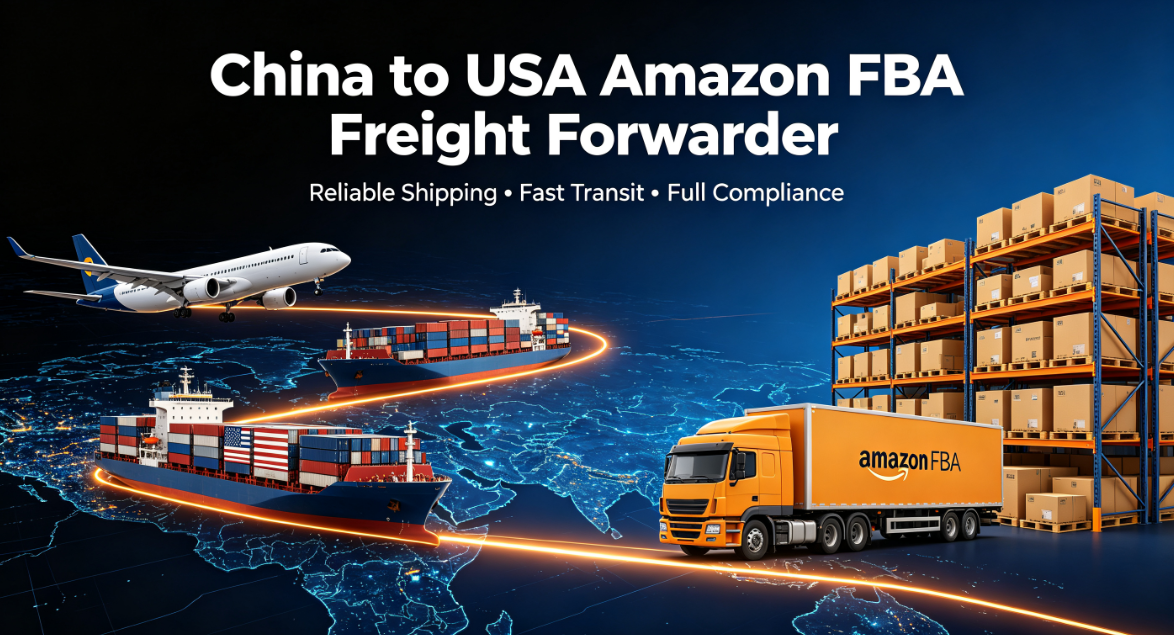
Sea Freight vs Air Freight vs Express: What Actually Works for Amazon FBA
There is no single “best” shipping method. The right choice depends on your product value, weight, volume, restock urgency, and storage fees. Here’s how I break it down for sellers.
Shipping Mode Comparison Table
| Mode | Transit Time | Cost | Best For | Watch Out For |
|---|---|---|---|---|
| Sea Freight LCL | 25–40 days door to door | Lowest per CBM | Bulky, heavy, lower-value goods | Longer lead times, higher risk of port congestion |
| Sea Freight FCL | 22–35 days door to door | Best for 15+ CBM | Large restocks, heavy shipments | Container stuffing and drayage delays |
| Air Freight | 8–14 days door to door | Medium-high | Mid-value products, urgent restocks | Chargeable weight can surprise you |
| Express (DHL/UPS/FedEx) | 3–7 days door to door | Highest per kg | Small, high-value, time-critical items | Per-kg costs can erase profit quickly |
Sea Freight: LCL vs FCL
LCL (Less than Container Load) means your goods share a container with other shippers. You pay by cubic meter or per kilogram, whichever is greater. For Amazon sellers shipping 3–10 CBM, LCL is often the sweet spot. But keep in mind: LCL shipments move through a CFS (container freight station), which can add 3–7 days at both origin and destination.
FCL (Full Container Load) gives you a dedicated 20ft, 40ft, or 40HQ container. If your shipment is above 12–15 CBM, FCL usually costs less per unit and reduces handling risk. You also avoid sharing container space with cargo that may trigger customs exams.
Air Freight and Chargeable Weight
Air freight is faster, but the billing weight is not always your actual weight. Forwarders use chargeable weight:
Chargeable weight = the greater of actual weight or volumetric weight.
Volumetric weight = (Length × Width × Height in cm) ÷ 6000
For example, a carton that is 60×50×40 cm has a volume weight of 20 kg even if it weighs only 12 kg. If you ship light but bulky products, air freight can become surprisingly expensive.
The Real Cost Is Not Just Freight
When comparing quotes, do not look only at the per-CBM or per-kg rate. The true landed cost includes:
Origin pickup and warehouse fees
Export customs clearance
ISF filing fee
AMS filing
Customs bond
USA import duty
Customs clearance fee
Port or airport handling
Trucking to Amazon
Palletization and labeling
Potential demurrage, detention, or storage
A quote that seems $0.5/kg cheaper can become $500 more expensive once hidden charges hit. Always ask for an all-in DDP door-to-FBA quote when possible.
Understanding FBA Head-Haul: From Factory Floor to Amazon FC
The term Amazon FBA head-haul refers to the entire outbound logistics chain from your supplier in China to Amazon’s fulfillment center in the USA. It is not just the international shipping leg. It includes the small details that cause big problems if ignored.
Typical FBA Head-Haul Process
Factory pickup — The forwarder sends a truck to your supplier in Ningbo, Shenzhen, Guangzhou, Yiwu, or wherever you manufacture.
Warehouse receiving and inspection — Goods are counted, weighed, measured, and checked against your packing list.
Labeling — Each carton must have a unique FBA shipment label. Units inside may also need FNSKU labels. This can be done by your supplier or the forwarder’s warehouse.
Export clearance — The forwarder files export documentation with Chinese customs.
International transit — Ocean, air, or express movement.
US import clearance — The forwarder’s US customs broker files entry, pays duty and tax, and clears the shipment.
Final delivery to Amazon FC — A trucking carrier delivers by appointment to your assigned fulfillment center.
FBA Carton and Pallet Requirements That Trip Up Sellers
Amazon has very specific rules for FBA shipments. If you don’t follow them, Amazon may refuse delivery or charge you non-compliance fees.
Carton Requirements
Maximum carton weight: 50 lb (22.7 kg) unless the product is oversized and marked “Team Lift”
Carton dimensions: no side longer than 25 inches (63.5 cm), unless the product itself is oversized
Use a sturdy six-sided box, preferably B-flute or better
Don’t use straps, tape over the shipping label, or loose packaging
Print labels clearly, and cover old labels completely
Pallet Requirements
Standard pallet size: 40 × 48 inches
Maximum height: 72 inches including pallet
Maximum weight: 1,500 lb
Pallets must be wrapped properly with clear stretch wrap
Why Forwarders with Amazon FBA Experience Matter
A general freight forwarder may not know that Amazon requires delivery appointments or that certain fulfillment centers are stricter about pallet condition. A forwarder that regularly handles China to Amazon FBA USA head-haul will catch issues before they become expensive problems.
For example, I’ve seen shipments of 200 cartons get rejected at an Amazon warehouse because the FBA labels were smudged or placed over box seams. The trucking company had to return the pallets, re-label them at a nearby warehouse, and rebook delivery. That added 5 days and nearly $800 in rework fees. A good FBA forwarder checks labels before the goods leave China.
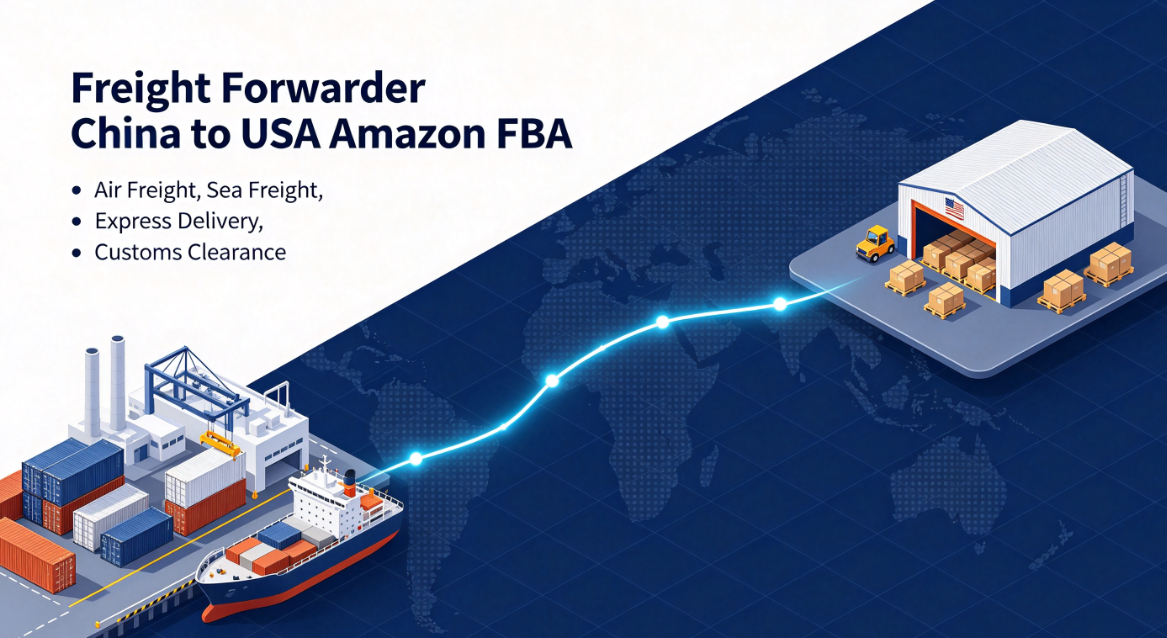
DDP Door-to-Door Shipping: Why Most Amazon Sellers Prefer It
If you sell on Amazon, you already deal with product returns, PPC, reviews, and inventory forecasting. The last thing you want is to become a customs broker or import expert. That’s why DDP (Delivered Duty Paid) is the most popular shipping term for Amazon sellers.
What DDP Actually Means
Under DDP, the freight forwarder takes full responsibility for:
Export clearance in China
International freight
US import customs clearance
Duty, tax, and customs fees
Final trucking to your Amazon fulfillment center
You get a door-to-door price, and you don’t need to set up a US importer of record or worry about customs exams. This is ideal for sellers who are not registered US entities, or who simply want predictable logistics costs.
DDP vs DDU vs DAP
| Incoterm | Who Pays Duty & Tax | Who Handles Import Clearance | Best For |
|---|---|---|---|
| DDP | Shipper/forwarder | Forwarder | Amazon sellers who want all-in pricing |
| DDU/DAP | Buyer/consignee | Buyer’s customs broker | Buyers who have their own import process |
| EXW | Buyer arranges everything | Buyer’s forwarder | High-volume sellers with dedicated logistics teams |
Why DDP Can Save You More Than Money
When you get an all-in DDP quote, you can calculate your exact landed cost per unit before the goods ship. That means you can price your products confidently and avoid surprise customs fees.
But not all DDP services are equal. Some forwarders quote low DDP rates and then use slow consolidators, skip proper customs value declarations, or hold shipments until you pay “additional charges.” You need a forwarder with a solid US customs brokerage partner and a transparent billing model.
Homitt Freight Forwarding, for example, provides dual-clearance DDP door-to-door service from China to Amazon warehouses in the US and Europe. They handle export and import clearance, duty and tax payment, and final delivery — which takes the guesswork out of the process for Amazon sellers. I don’t mention this to push a brand, but because when you’re comparing forwarders, the key is whether their DDP service genuinely includes everything or just looks cheap on paper.
How to Calculate Real Shipping Costs and Avoid Hidden Fees
One of the most frustrating experiences for Amazon sellers is getting a quote for $280 per CBM and then receiving a final invoice with six extra line items. Here’s how to ask the right questions and calculate your real landed cost.
Key Cost Components in a China to USA FBA Shipment
| Cost Item | Typical Range | Notes |
|---|---|---|
| Origin pickup | $50–$200 | Depends on distance from port and cargo volume |
| Export clearance | $30–$80 | Usually included in LCL or FCL quote |
| Ocean freight | $80–$180 per CBM (LCL) | Varies with peak season and trade lane |
| Air freight | $4–$8 per kg | For chargeable weight |
| ISF filing | $25–$50 | Required for ocean shipments to USA |
| Customs bond | $45–$100 | Single entry or annual |
| US customs clearance | $75–$150 | Broker fee |
| Import duty | Product-dependent | Based on HTS code and declared value |
| Port/CFS handling | $40–$80 per CBM | Destination terminal fees |
| Trucking to Amazon | $150–$450 | Depends on distance and pallet count |
| Palletization | $15–$25 per pallet | If goods are floor-loaded or need rework |
| Labeling | $0.50–$1.50 per carton | If supplier doesn’t label correctly |
Landed Cost Formula
Use this formula to know your true cost per unit:
Landed cost per unit = (Product cost + Freight + Duty + Fees) ÷ Number of units
For example, if you ship 500 units:
Product cost: $5,000
Freight DDP: $1,200
Duty: $200
Fees: $100
Total: $6,500
Landed cost per unit: $13.00
If your product sells for $34.99 on Amazon, that $13 unit cost plus Amazon referral fee, FBA fulfillment fee, and PPC may leave you with a decent margin. But if freight spikes to $1,800, your unit cost jumps to $14.20 — which may be the difference between profit and loss.
Hidden Fees That Catch New Sellers
Demurrage — charged when a container sits at the port beyond free time
Detention — charged when the trucker waits too long at pickup or delivery
Customs exam — if US customs pulls your shipment, you may pay exam fees of $200–$500 or more
Amazon non-compliance fees — if your cartons don’t meet requirements, Amazon may charge per unit or reject the shipment
Remote area surcharge — some Amazon facilities are considered remote by carriers
A reputable forwarder will list all known charges before you ship. If a quote seems too low, ask “What is NOT included?”
Common Mistakes Sellers Make When Shipping from China to Amazon USA
I’ve watched hundreds of shipments move through the system. Here are the mistakes that repeat over and over — and how to avoid them.
1. Labeling at the Factory Without Verification
Many sellers ask their supplier to print FBA labels and stick them on cartons. That can work, but only if the supplier understands Amazon’s requirements. I’ve seen suppliers use tape over labels, place them on box seams, or use low-quality printers that produce unscannable barcodes.
Fix: Send your forwarder digital label files. Ask them to inspect and re-label at their China warehouse if needed.
2. Underestimating Peak Season Congestion
Between August and October, ocean freight from China to the US gets slower and more expensive. Ports like Los Angeles and Long Beach can experience vessel delays of 7–20 days. Air freight capacity tightens. If you plan to restock for Q4, start in June or early July.
Fix: Build a 30–45 day buffer into your peak-season restock plans.
3. Choosing the Cheapest Forwarder Every Time
Price matters, but consistency matters more. A forwarder that loses your cargo or holds it for hidden fees can cost you thousands in lost sales. Sellers who switch forwarders to save $20 per CBM often learn this the hard way.
Fix: Vet forwarders on FBA experience, US customs capability, real-time tracking, and communication speed.
4. Shipping Floor-Loaded Cartons Without Palletization
Amazon requires palletized delivery for many shipments. If your goods arrive at the US warehouse floor-loaded, you may need to palletize before delivery — adding cost and delay.
Fix: Decide on palletization before cargo leaves China. In many cases, palletizing at origin is cheaper.
5. Ignoring Product Compliance and Duty Classification
Just because your supplier says “no special duties” doesn’t mean US customs agrees. Some products require FDA, FCC, or CPSC compliance. Misclassification can lead to fines or cargo seizure.
Fix: Work with a forwarder that has a licensed US customs broker. Provide accurate HS codes and product descriptions.
How to Vet a Freight Forwarder for Amazon FBA Shipping
Here is a practical checklist I share with sellers who are choosing a freight forwarder from China to USA Amazon FBA.
Experience
Do they handle Amazon FBA head-haul regularly?
Do they know FBA carton and pallet requirements?
Can they provide references from other Amazon sellers?
US Customs Capability
Do they have an in-house or partner US customs broker?
Can they file ISF, entry, and duty payments under DDP?
How do they handle customs exams?
Transparency
Do they provide an all-in quote without vague “other charges”?
Can you see a breakdown of freight, duty, and fees?
What is their process for notifying you of changes?
Tracking and Communication
Do they offer real-time cargo tracking?
How fast do they respond to WeChat, WhatsApp, or email?
Will you have one point of contact?
Network
Do they have consolidation warehouses in major Chinese cities?
Do they have partner agents at major US ports and airports?
Can they handle trucking to Amazon FCs on both the East and West Coast?
Some forwarders specialize in particular lanes. For example, Homitt Freight Forwarding focuses on shipping services from China to the United States and European countries. Their service set includes sea and air freight, FBA head-haul, and DDP door-to-door. They operate with the understanding that Amazon sellers need more than a cheap rate — they need on-time delivery, clear communication, and predictable costs. That is the baseline expectation you should have for any forwarder you use.
Real-World Workflow: From a Factory in Shenzhen to Amazon FC in California
Let me walk you through a typical shipment so you can see the timeline and decision points.
Scenario
Product: kitchen gadget
Quantity: 2,000 units
Cartons: 200 cartons, 50×40×35 cm each
Total volume: 14 CBM
Total weight: 2,100 kg
Destination: Amazon FTW1 in Texas (routed through Los Angeles/Long Beach)
Timeline for Ocean LCL DDP
| Day | Action | Notes |
|---|---|---|
| Day 1 | Book with freight forwarder | Provide packing list, commercial invoice, FBA labels |
| Day 2 | Factory pickup in Shenzhen | Cargo picked up and checked |
| Day 3 | Arrive at forwarder’s warehouse | Cargo counted, labels verified, palletized |
| Day 5 | Export clearance completed | Chinese customs cleared |
| Day 8 | Cargo loaded on vessel from Yantian | Vessel cutoff met |
| Day 20 | Vessel arrives at Los Angeles | Wait for unloading and terminal handling |
| Day 23 | US customs cleared | Duty paid under DDP |
| Day 25 | Trucking from LA to FTW1 | Appointment scheduled with Amazon |
| Day 27 | Delivered to Amazon FTW1 | POD received |
| Day 30 | Inventory checked in | Available for sale |
This is a smooth run. In real life, there are often delays at the port, with customs, or with Amazon’s delivery appointment system. That’s why I tell sellers to plan their restock 45–60 days before they expect to run out of inventory for ocean freight.
If the same shipment went by air freight, the timeline would compress to about 8–12 days, but the freight cost would increase from roughly $1,200–$1,800 ocean to $8,000–$12,000 air. For many products, that math only works for a small, urgent top-up shipment.
Final Thoughts: Build a Logistics System, Not Just a Shipment
The sellers who grow consistently on Amazon USA don’t rely on luck or the cheapest quote. They build a logistics system that includes:
A reliable supplier who packs and labels correctly
A freight forwarder that understands FBA delivery requirements
Accurate landed cost calculations
A restock calendar based on real lead times
A backup plan for peak season congestion
Your China to Amazon FBA USA freight forwarder is not just a vendor. They are the bridge between your factory and your customers. When that bridge works, your inventory flows predictably and your brand stays in stock. When it breaks, you lose sales and momentum.
If you’re looking for a partner that covers sea and air freight, FBA head-haul, and DDP door-to-door service with a focus on the China-to-USA lane, Homitt Freight Forwarding is one of the providers worth shortlisting. They offer the kind of end-to-end service that Amazon sellers need: cargo collection, packaging, customs clearance, duty payment, and final delivery — with real-time tracking and a team that understands the US market.
But no matter which forwarder you choose, remember the principle: predictability beats price. A good forwarder saves you from stockouts, hidden fees, and Amazon rejection headaches. That’s worth far more than the few dollars per CBM you might save by going with an unknown.
Plan early, ask the right questions, and treat logistics as a competitive advantage — not just a cost center. Your FBA business will run smoother for it.